Role
Design Lead & Product Designer
Duration
12 months
Team
Product, Engineering, Legal, Growth
Outcome
IP certification · Digital account launched for CPF + CNPJ
Strategic Context
The Real Goal Was the License
Clara was a LatAm corporate expense management fintech, known for its corporate credit card. But credit-only was a ceiling. To expand its transactional revenue in Brazil and compete with digital banks, Clara needed to become a regulated Payment Institution (IP) under the Banco Central do Brasil.
The digital account wasn't a feature request. It was the product the IP license would make possible, and the design process had to move in sync with the licensing timeline. Scope decisions, design priorities, and component rollout were all shaped by a single constraint: the IP calendar.
I led this project end-to-end, covering stakeholder alignment, research strategy, interaction design, and usability validation, while simultaneously acting as the sole Brazilian designer on a team initially built around the Mexican market.
Regulatory Constraints
Designing in Two Parallel Tracks
Clara's IP permission was still in progress when the design work began. That created an unusual constraint: the product had to launch before the license was approved, which meant operating through BTG as a White Label partner for the initial phase.
This shaped everything:
- White Label alignment. BTG's existing transactional infrastructure imposed visual and structural constraints. Every design decision required technical alignment between Clara and BTG: what looked like a UX choice was often a negotiation about what the partner's system could support.
- Brazilian-first components in a global DS. Clara had a global design system built for Mexico. Brazil required new components (new table molecules for the extract, Portuguese-language content, CNPJ/CPF fields) that didn't exist in the global library. I built them separately, structured for eventual integration into the global pipeline.
- Compliance language. Financial content in Brazil requires specific legal language to avoid dark patterns. Every screen went through a communication framework review; content wasn't an afterthought, it was a deliverable.
- Pix as a strategic second phase. Pix was always in scope, deliberately scheduled for a subsequent phase. Full Pix compliance with BACEN's requirements demands a level of infrastructure maturity that takes longer to build properly than the MVP timeline allowed. Launching the account first, validating the operational foundation, and then adding Pix in a dedicated phase was a conscious product strategy. The architecture was designed with that sequencing in mind from day one.
Research
Understanding the Brazilian User
I ran exploratory interviews with CFOs, finance coordinators, and operations leads at Brazilian SMEs, the target segment. Clara's existing customers were there for the credit card and credit line. The digital account was a different value proposition, and I needed to understand whether it would land.
Key findings:
- Users loved the credit card. The digital account was interesting only if it reduced friction in their existing banking operations, not as a replacement for their main bank.
- DDA (Débito Direto Autorizado) was a unanimous demand. Bolepix in the DDA list was described as "gold."
- Batch payments and approval flows were the clearest differentiator against traditional banks.
- The extract was a pain point everywhere: poor visibility, poor reconciliation, poor filtering. This became a central design investment.
Benchmarking against Stark Bank, Conta Simples, and Cora confirmed the competitive positioning: Clara couldn't win on account status, but could win on experience, integrations, and expense management depth.

Manuela Verguero
CFO · 39
"I need clear, strategic communication, result visibility, process control, and financial guarantees."
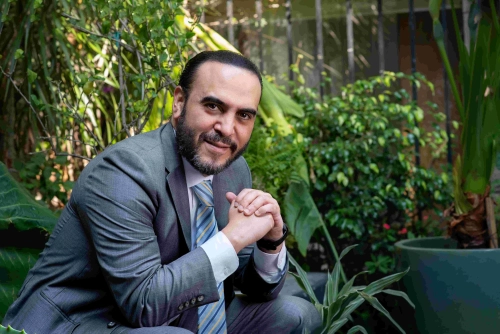
André Castelo
Finance Coordinator · 35
"I need agility in daily operations, with approval flows and information from other parts of the company."
Scope & MVP Decisions
What the IP Calendar Allowed
With the IP timeline as the organizing constraint, I worked with stakeholders to define an MVP scope that was both technically feasible within the White Label and commercially viable for the Brazilian market:
MVP — Launched
- Account creation
- Transfers (TED in/out)
- Boleto payment
- Boleto deposit
- Balance and extract view
- 110% CDI yield
Deferred to IP calendar
- Pix strategic phase 2 — BACEN infrastructure maturity
- Batch payments technical complexity + IP phase
- Approval flows post-MVP roadmap
- DDA / Bolepix post-IP
Target audience: Brazilian SMEs, small and medium companies seeking financial expansion without fully structured financial operations. Two user profiles drove every design decision: the strategic CFO who needed visibility and control, and the operational Finance Coordinator who needed speed and clear approval flows.
Design Process
End-to-End, from Research to Handoff
This was a full double-diamond engagement (discover, define, develop, deliver), with me holding the design lead and product designer roles simultaneously.
- Discover: exploratory interviews, benchmarking against 6 competitors, secondary research on Brazilian banking behavior and regulatory landscape
- Define: proto-persona validation for the Brazilian market, user journeys for each MVP flow, HMW framing with stakeholders
- Develop: wireframes and flowcharts for 6 journeys, new DS components (built outside the global pipeline for BR specificity), BTG technical alignment sessions, communication framework for all financial content
- Deliver: high-fidelity prototypes, formative usability testing, iteration based on diagnostic findings, final handoff documentation
The extract screen was the most complex design challenge, requiring a new table molecule that worked within BTG's constraints while meeting Brazilian users' need for filtering, reconciliation visibility, and CPF/CNPJ identification per transaction.
Validation
Formative Usability Testing
I ran formative usability tests on all MVP journeys using a high-fidelity Figma prototype. Testing at the prototype stage was a deliberate choice: formative testing is about validating the interaction design before engineering investment, not about benchmarking system performance. Changing a flow in Figma costs hours; changing it after build costs weeks.
The sessions were moderated, with participants thinking aloud while completing each task. I measured task completion and visual attention patterns via eye-tracking analysis.
Hypothesis: "The design adequately supported the platform and allowed the MVP tasks to be completed efficiently and satisfactorily."
12.2s
Account creation
14.2s
Transfer funds
8.3s
Boleto payment
10s
TED in/out
7.5s
Charge
16s
View extract
No tasks went uncompleted. Key diagnostic findings:
- Once users understood the click flow, it became mechanical, a signal the interaction pattern was consistent and learnable.
- Wrong clicks were curiosity-driven (exploring active states), not navigation failures.
- The deposit sub-account context was unclear: users completed the task without understanding what they'd done. This became a content and UX refinement priority.
- The extract's longer completion time reflected intentional exploration, not difficulty. Users were reading everything in the table, which was the goal.
Prototype
Explore the Design
The high-fidelity Figma prototype used in usability testing — open in Figma for full navigation.
Outcome
IP Certified. Account Live. Both CPF and CNPJ.
1
Payment Institution license
2
Account types — CPF + CNPJ
30k+
Companies on the platform
12 mo
Concept to launch
Clara received its Payment Institution certification from the Banco Central do Brasil. The digital account launched as the direct product of that certification, available for both individual customers (CPF) and legal entities (CNPJ), making Clara a full-service transactional platform, not just a credit card company.
The BR-specific design system components I built (the extract table molecule, the Brazilian transfer flows, the compliance-reviewed content framework) were subsequently integrated into Clara's global design system, extending the work beyond a single-market launch.
I left the company in a restructuring shortly after launch. The product continued and scaled. Today Clara's digital account serves 30,000+ companies including Burger King, Rappi, and Starbucks, with unlimited free Pix, TED, and boleto at scale.
The work shipped. The product survived. The users stayed.
At Clara, Pix was planned but intentionally deferred to Phase 2 — the IP license infrastructure had to be stable before a real-time payment rail could run on top of it. Eighteen months later, at Transfero, I was the designer who built that infrastructure: 13 Pix journeys, 22 chapters of BACEN regulation, full compliance approval. Brazil's payment stack evolved fast. See how that story continued →